


Cell to Singularity: Evolution
4.512.37K Reviews
App Specs
- Version
- 49.33
- Updated On
- License
- Free
- Downloads
- 10,000,000+
- Developer
- ComputerLunch
- Categories
- Simulation
- Platform
- Android
Screenshots
 Analysis by AppCompare
I approached Cell to Singularity: Evolution less as a test of how quickly I could tap and more as a way to see whether a game could make a huge subject feel manageable. Its central idea is a growing chain of life and change, and the most useful part of that idea is how it turns progress into a series of small choices. I could make a little progress during a spare moment, then come back later with a clearer sense of what I wanted to unlock next.
A science theme built around incremental progress
As a simulation game from ComputerLunch, it takes a broad sweep through evolution, from early life toward human society and imagined futures. That scope gives the game a different feel from a construction simulator, where the main reward is designing a place, or a conventional strategy game, where opponents and tactical decisions dominate. Here, I was mostly following a conceptual path and deciding how to use the resources I had gathered to move farther along it.
That focus works especially well for curious players who like science but do not necessarily want a formal lesson. The game breaks a vast timeline into reachable steps, so I could learn in short bursts instead of needing to remember a long explanation all at once. The trade-off is that someone looking for a detailed, interactive scientific model may find the presentation more introductory than rigorous. I would treat it as a playful prompt to explore ideas, not as a substitute for a textbook or a carefully sourced course.
What the tapping loop feels like
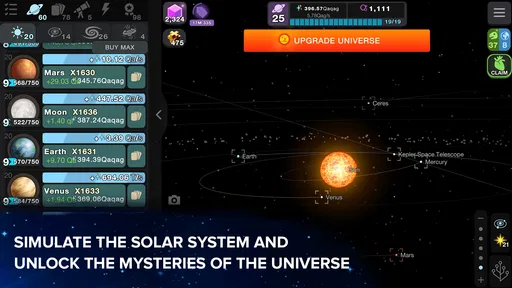
The core loop is easy to understand: tapping earns entropy, and entropy helps open evolutionary milestones. That simplicity makes the first sessions approachable, but it also means the physical action itself can become repetitive. I found the better question was not “How many times can I tap?” but “Which available step will make my next visit more interesting?” That small shift makes the game feel more like light planning than a test of finger speed.
A practical habit is to pause before spending everything on the first visible option. Looking across the available milestones helps me keep a sense of direction, especially when several developments seem tempting at once. If I am playing casually, I choose the route that catches my interest rather than trying to optimize every move. If I want to make more deliberate progress, I use a session to check what each purchase opens up and save enough entropy for the next meaningful step.
This is also a useful game to dip into while waiting for a kettle or taking a short break: I can make a few decisions, read a bit, and put the phone away without needing to coordinate with other players. It is less suited to a commute where I need something demanding my full attention, or to a long session built around skillful controls. The appeal is gradual discovery, not a fast challenge that rewards reflexes.
Milestones make the subject easier to follow
Each milestone’s short explanatory text gives the progression context. Rather than treating the subject as a list of names to collect, I could connect an unlock with a broader change in life or civilization. I recommend slowing down enough to read those notes, particularly when a new stage catches your attention. Skipping them is possible in spirit, but it removes much of what distinguishes this particular clicker from one that uses abstract upgrades with no educational theme.
Worth Reading Before You Choose

EA SPORTS FC Mobile 26 Is a Bigger Football Game, but It Takes Time

Flipboard Shows What News Apps Must Do Beyond the Feed

Switching to Android Auto Means Rethinking Your Driving Routine

Google Calendar Makes a Crowded Week Easier to Manage

Ludo King Makes the Most of the Minutes Between Plans

Baby Panda World Brings Quick Play to Modern Phones, but Its Game Library Feels Busy
The presentation also shapes how I read the game. Its visuals are restrained, with environments and life forms used to signal changes in the journey rather than overwhelm the screen with spectacle. The soundtrack is calm, which suits the low-pressure rhythm. I would not choose it for dramatic animation or a demanding audio experience; the quieter style is part of why it works as background play, though players who need constant visual variety may find it subdued.
Learning without mistaking it for a course
For a parent or teacher, the game can be a conversation starter: a child can point to a milestone, read its brief explanation, and ask what happened next. Its age rating is Everyone 10+, so it is aimed at players ten and older. I would still sit with a younger or especially curious child if the goal is to discuss scientific claims in depth, because a short game description cannot provide all the nuance of a classroom lesson.
It is free to start, with in-app purchases ranging from $0.99 to $99.99 per item. My advice is to try the ordinary progression before deciding whether spending fits your play style. The game’s basic appeal is the gradual chain of discoveries, so a purchase should feel like a personal convenience or choice, not an assumed requirement. If you are trying to keep a child’s spending controlled, check purchase settings on the device before handing it over.
The Journey of Evolution
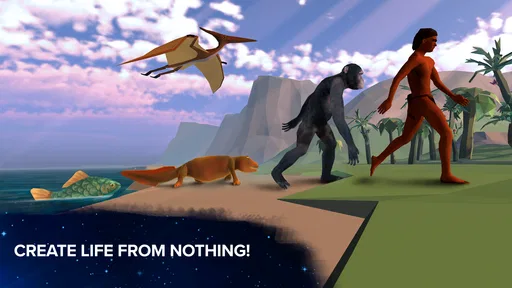
The premise of Cell to Singularity: Evolution is simple yet captivating. You start as a single cell and gradually evolve through various stages of life. The game beautifully captures the essence of evolution, from humble beginnings in the primordial soup to the complex civilizations we know today. It’s like having a mini history lesson, but way more fun and interactive.
Gameplay Mechanics
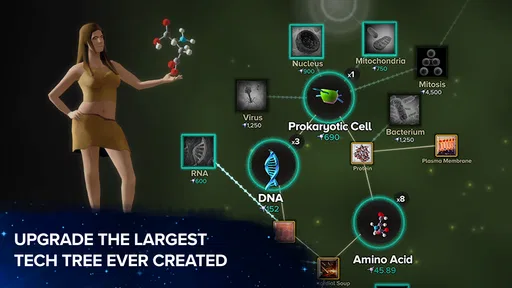
At its core, this game is a clicker. You accumulate “entropy,” the in-game currency, by tapping on the screen, which you then use to unlock evolutionary milestones. It’s a straightforward mechanic, but what sets it apart is the depth of content and the educational value it offers. Each milestone is accompanied by interesting facts and trivia about the particular stage of evolution you're unlocking. It’s like having a digital textbook that you can't put down.
In practice, I would not judge the game by how quickly I can generate entropy in one sitting. The more useful decision comes after a return to the game: I can look at what is available, decide which milestone sounds worth exploring, and spend with that next goal in mind. That approach reduces aimless tapping and gives the progression a little structure. It also helps answer a common question: do I need to stay focused for a long time? Not necessarily. The simple loop works for short visits, although players who dislike repeated tapping may still find the central interaction monotonous.
Visual and Audio Experience
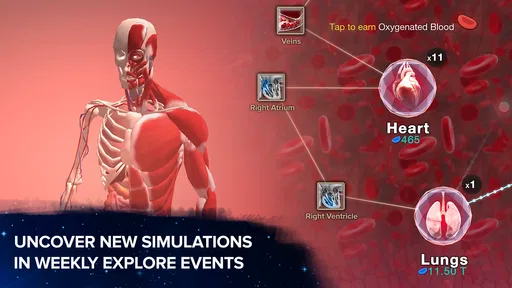
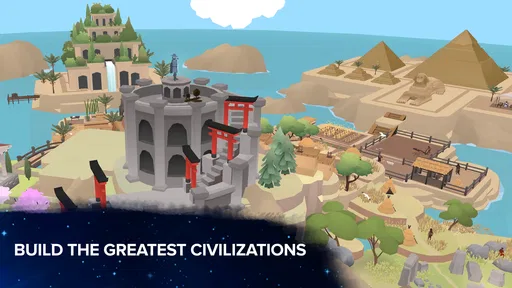
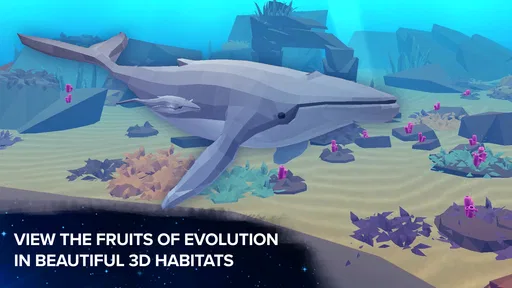
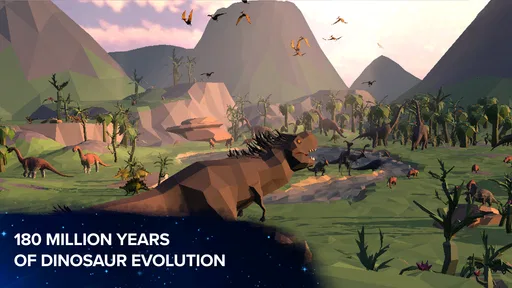
The visual design of the game is minimalistic yet effective. The graphics aren’t flashy, but they do a fantastic job at representing different life forms and environments. The deep blue of the oceans, the lush green of the forests, and the eventual rise of human civilization are portrayed in a way that’s both engaging and informative.
The soundtrack deserves a special mention, too. The ambient music is soothing and perfectly complements the theme of evolution. It’s the kind of music that keeps you relaxed as you tap away, learning about the wonders of life on Earth.
That calm presentation makes it easy to keep the game open during a quiet break, but it is not the same as playing a richly animated exploration game. I would choose this when I want a gentle sense of movement and discovery, not when I am looking for dramatic scenes or demanding controls. The visual restraint keeps attention on the timeline and its unlocks, though it may not hold someone who needs frequent bursts of spectacle.
Educational Value
What I love most about this game is its educational aspect. It doesn’t just provide entertainment; it enriches your knowledge about evolution and the history of our planet. Each evolutionary milestone you unlock is accompanied by a short blurb that explains its significance. It’s a great way to learn without feeling like you’re being lectured.
My own suggestion is to use those blurbs as starting points rather than treating each one as the last word on a topic. Read when a milestone interests you, then follow that curiosity outside the game if you want more depth. This is a good fit for a learner who enjoys being nudged from one idea to another; it is a weaker fit for someone who needs citations, extended explanations, or a formal curriculum built around assessments.
Progression and Challenges
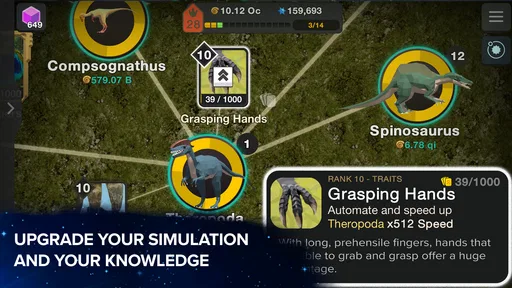
As you progress, the game introduces new challenges to keep things interesting. The further you go, the more complex the evolutionary tree becomes. It’s not just about tapping endlessly; you need to strategize how to spend your entropy wisely to unlock the next big leap in evolution.
Additionally, the game introduces “Darwinian” challenges, which are limited-time events that offer unique rewards. These challenges encourage you to think critically and plan your evolutionary path carefully.
Limited-time activities bring a different kind of pressure from the relaxed main loop. I would treat them as optional diversions, not as a reason to reorganize every day around the game. If I have a free moment and feel like making a focused run, a challenge can give that session a clearer purpose. If I am busy, the ordinary progression is the better reason to return, and missing an event should not turn a casual game into an obligation.
One helpful way to approach progression is to separate curiosity from efficiency. Sometimes I would unlock the development that sounds most interesting; at other times, I would choose the option that appears to help open the next stage. Neither approach needs to be treated as the “correct” one. The first keeps the experience personal, while the second gives players who enjoy resource planning a modest strategic layer without turning the game into a demanding management simulation.
Endless Possibilities
One of the coolest features is the speculative evolution aspect. Once you reach the present day, the game doesn’t stop there. You get to explore futuristic possibilities and what life could look like in the far future. This speculative element adds a layer of creativity and imagination to the experience, making it more than just a historical journey.
Moreover, the game is frequently updated with new content, keeping the experience fresh and exciting. Whether it’s new evolutionary stages or additional challenges, there’s always something to look forward to.
That shift from looking back to imagining what might come next is a welcome change of mood. The earlier journey gives the game a recognizable educational anchor; the speculative stretch invites a more imaginative kind of curiosity. I would not approach those future possibilities as predictions. Their value is that they let the player wonder about change, rather than claim to map out exactly what will happen.
Who should give it a try
The game suits people who enjoy incremental progress, bite-sized science content, and the satisfaction of gradually opening a large subject. It has attracted a broad audience, with more than 10 million installs and an average rating of 4.6 from around 388,000 ratings; those figures suggest a substantial player base, though they cannot tell me whether its particular rhythm will suit you. It is free to play, carries an Everyone 10+ age rating, and its current version is 44.17, with Android 6.0 as the minimum operating system requirement.
I would recommend it to a curious teenager, an adult who likes science-themed games, or anyone who wants a low-pressure alternative to a competitive mobile game. I would skip it if I wanted direct control over characters, a story told through dialogue and missions, or a realistic laboratory simulation. Those alternatives make more sense for hands-on experimentation or narrative momentum; this game’s strength is the steady sequence of ideas and the choice of what to unlock next.
A realistic use case is a short evening wind-down: I open the game after dinner, check the next milestones, spend entropy on one that advances the path I care about, and read its explanation before putting the phone down. That gives me a small sense of completion without requiring a long session. If tapping starts to feel like work, I take a break rather than pushing through; the game is at its best when the pace remains relaxed.
In conclusion, Cell to Singularity: Evolution is more than just a game; it’s an engaging educational tool. It’s perfect for anyone with a curiosity about evolution or those who simply enjoy a good simulation game. The combination of educational content, satisfying gameplay mechanics, and endless possibilities make it a must-try. So, if you’re ready to embark on an evolutionary adventure, give this app a download and start tapping your way through the history of life itself!
Pros
- Engaging educational content on evolution.
- Stunning graphics and animations.
- No intrusive ads during gameplay.
- Regular updates with new content.
- Simple
- intuitive interface.
Cons
- Requires constant internet connection.
- Progress can feel slow without in-app purchases.
- Battery drains quickly during extended play.
- Limited offline functionality.
- May not appeal to non-science enthusiasts.
FAQs for Cell to Singularity: Evolution
What is the main objective of Cell to Singularity: Evolution?
Cell to Singularity: Evolution is an incremental game where the main objective is to explore the history of life on Earth, from the primordial soup to the development of complex civilizations. Players earn points to unlock new life forms, technologies, and evolutionary milestones, creating an engaging educational experience about evolution.
Is Cell to Singularity: Evolution free to play?
Yes, Cell to Singularity: Evolution is free to download and play on both Android and iOS platforms. However, the game does offer in-app purchases that can enhance the gaming experience by speeding up progress or unlocking additional content. These purchases are optional and not necessary to enjoy the game.
What educational value does Cell to Singularity offer?
Cell to Singularity provides significant educational value by allowing players to learn about the history of life on Earth. The game covers various aspects of evolution, from the basic building blocks of life to the development of human civilizations, making it a fun way to understand complex scientific concepts through interactive gameplay.
Does Cell to Singularity require an internet connection to play?
While Cell to Singularity can be played offline, certain features like updates, in-app purchases, and some special events require an active internet connection. Playing online also ensures that your progress is saved in the cloud, allowing you to continue your game across different devices seamlessly.
Can I play Cell to Singularity without making any in-app purchases?
Absolutely, Cell to Singularity can be fully enjoyed without spending any money. In-app purchases are available for players who wish to accelerate their progress, but they are entirely optional. The game is designed to be engaging and rewarding, even for players who choose to play without purchasing additional content.


